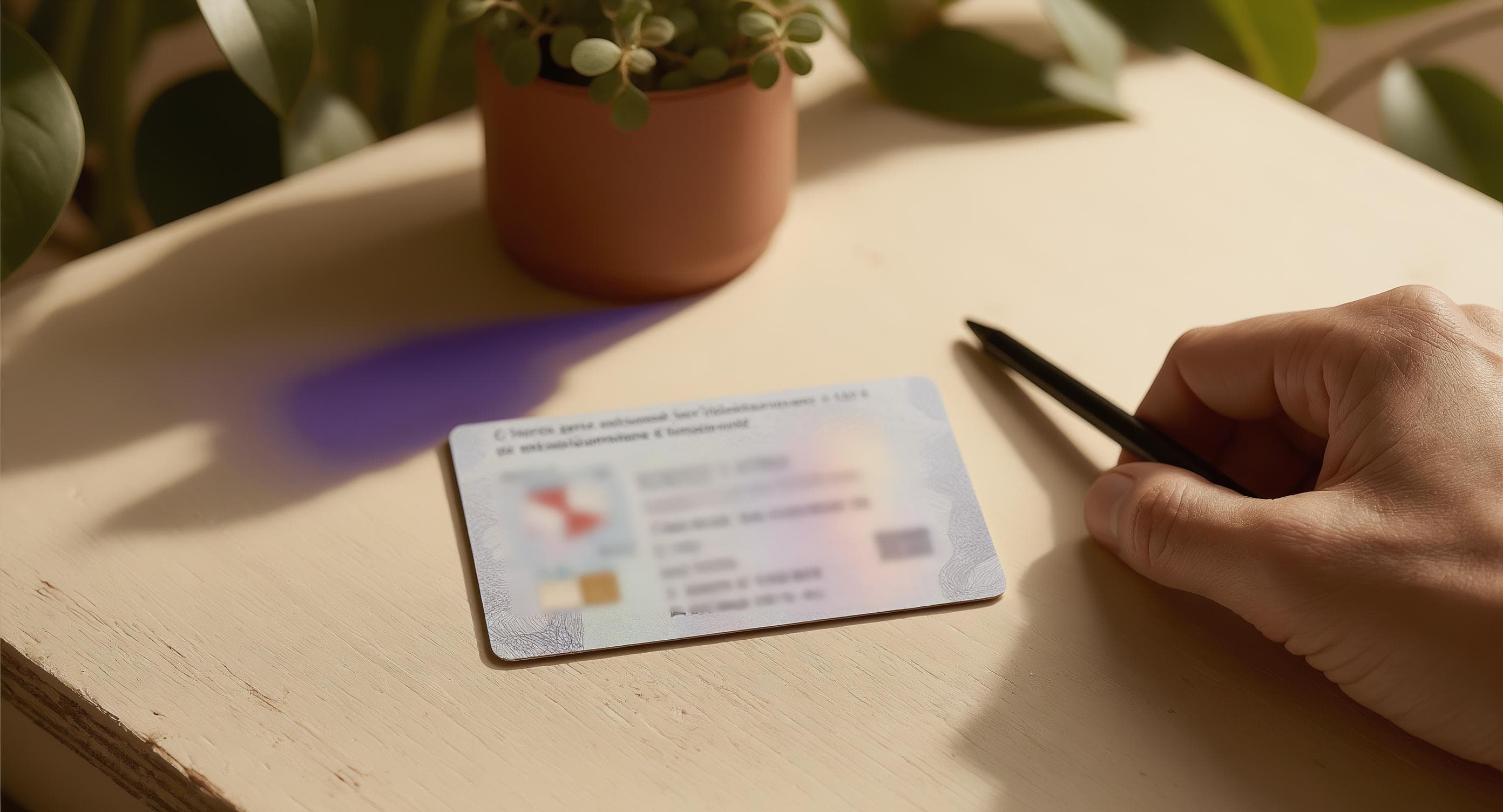
Just like the passport, the French national ID card (CNI) is no longer issued at the préfecture but at town halls equipped with a biometric data-collection device. Here are the real waiting times to expect in 2026, the documents you need, and how to book an appointment without an unpleasant surprise.
How long does it take to get an ID card in 2026
The total waiting time breaks down into two distinct steps: the time to land a town hall appointment, then the manufacturing time once the file is submitted and forwarded to the Agence nationale des titres sécurisés (ANTS, the national secure documents agency). Manufacturing itself is managed nationally and varies little between applicants at a given time. It's landing the appointment that, in practice, makes all the difference between a process wrapped up in two weeks and a file that drags on for over a month.
During quiet periods, a town hall appointment is generally available within a few days to three weeks depending on the commune, and manufacturing adds one to two weeks. Ahead of school holidays and in summer, demand rises sharply: the appointment itself can take over a month to secure in large cities, and manufacturing slows down too under the effect of the national volume being processed.
Waiting times observed as of 1 September 2026
These figures remain indicative and vary a lot depending on the commune, the time of year, and local demand. Use them to gauge your safety margin, not as a guaranteed timeline.
| Situation | Observed waiting time | Reference / legal timeframe |
|---|---|---|
| Town hall appointment, quiet period | A few days to 3 weeks | No legal deadline, depends on slots opened by the town hall |
| Town hall appointment, high demand (summer, holidays) | 4 to 8 weeks, sometimes more in large cities | No legal deadline, depends on slots opened by the town hall |
| Manufacturing after filing, quiet period | 1 to 2 weeks | Managed nationally by ANTS |
| Manufacturing after filing, busy period | 3 to 5 weeks | Managed nationally by ANTS |
| Validity (adult, since 2014) | — | 10 years from the date of issue |
| Cards issued to adults between 2004 and 2013 | — | Validity extended by 5 years beyond the printed date |
Documents to gather before your appointment
An incomplete file is the number one reason for a town hall to turn you away, which pushes back the start date of the manufacturing timeline just as much. Check every item before showing up.
For a standard renewal (adult)
- The online pre-application form (or, failing that, the paper Cerfa form available at the town hall).
- A recent ID photo meeting the current standards, not edited.
- Proof of address less than a year old (or the name of a parent hosting you, with the matching supporting documents).
- Your previous ID card, even expired, or a loss or theft declaration if you no longer have it.
For a first application
- A birth certificate less than 3 months old (full copy or extract with filiation), unless civil status can be verified directly through COMEDEC by the town hall.
- Proof of French nationality if it isn't clear from the birth certificate (naturalization decree, certificate of nationality).
- The same proof of address and photo requirements as a renewal.
For a minor
- The minor must be present regardless of age, along with a legal guardian holding valid ID.
- Proof of parental authority may be required if the family name differs or in specific family situations (shared custody, sole parental authority).
- A minor's ID card is free just like an adult's, no revenue stamp is needed outside of loss or theft.
How to get a town hall appointment
Only town halls equipped with a biometric data-collection device process ID card applications, and you can go to any of them in France, not just the one in your home commune. This freedom of choice is your best lever: if your local town hall is fully booked for a month, widen your search to nearby equipped communes, which are often less in demand.
Most town halls open their slots on their own website or through a shared appointment-booking service. Some préfectures also run a digital assistance desk where a staff member helps you finalize your ANTS pre-application, especially if you're struggling with the online service. This desk doesn't replace the town hall appointment for the biometric filing, but it can unblock a pre-application that went wrong. You can track availability for these desks on our live map in Gironde or in Nice.
The right move
ID card and passport: the same process, two different documents
The ID card and the passport follow exactly the same filing process: online pre-application, appointment at an equipped town hall, fingerprints and photo, then manufacturing managed by ANTS. You can even apply for both documents at the same appointment, which saves you a second trip if you need both. Check out our guide on passport renewal and its real waiting times if you also need to travel outside the Schengen area, where the ID card alone isn't enough.
How much does a French ID card cost in 2026
A first application or a standard renewal is entirely free, with no revenue stamp to buy, unlike the passport. Only a lost or stolen card requires paying a revenue stamp, at a nationally set amount.
- First application or standard renewal: free.
- Lost card: €25 revenue stamp.
- Stolen card: generally free upon presenting a police report, depending on the rules in force at the time of your application.
These amounts are indicative and can change by decree: always check the fee displayed at the time of your online pre-application. A non-compliant photo, retaken on-site by an approved photographer, sometimes adds to the total cost without being part of the revenue stamp itself.
Special cases: loss, theft, and who can apply for an ID card
A lost or stolen card can't be "renewed" in the strict sense: you need to start a new application, along with a loss or theft declaration (filed online or at a police station depending on the case). This extra document doesn't lengthen the manufacturing time, but it's required for the file to be accepted at the town hall.
The French national ID card is only issued to people of French nationality. If you're a foreign national living in France, your residence permit is what proves your identity and right to stay: check our guide on residence permit renewal and its waiting times so you don't confuse the two processes.
For processes that do go through the préfecture or a dedicated online desk (vehicle registration, driving licence, residence permit), the way it works is different: check our overview of processes that no longer go through the préfecture and on the difference between préfecture, sous-préfecture, and one-stop desk so you don't get the wrong contact.
What to do if the waiting time exceeds the norm
Contact the town hall where you filed first: it can check the ANTS tracking service and tell you the actual manufacturing status. An administrative block (a document deemed insufficient, an extra check) sometimes triggers a letter or email that went unanswered, which suspends the file without you knowing any other way.
If it's rather a town hall or préfecture appointment for another process that's eluding you, our guide on finding no préfecture slot available covers concrete levers to land one anyway. You can also browse every process tracked préfecture by préfecture in our préfecture directory, or monitor slots in real time on our live map.